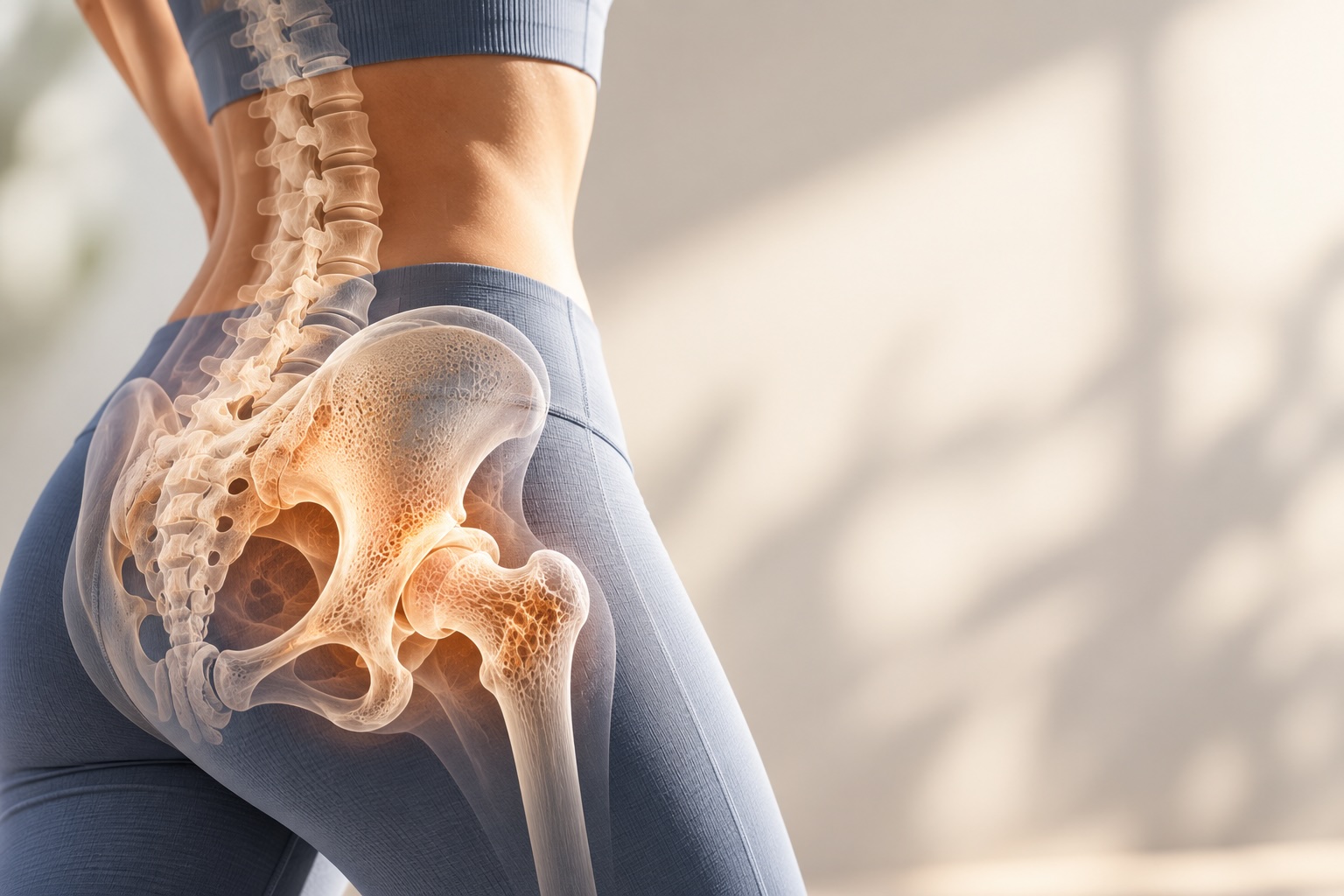
Strong Bones for Life: Why Exercise Is Your Best Defence Against Osteoporosis

Osteoporosis is often thought of as an inevitable part of getting older — something that simply happens with age and is managed through medication, caution and avoiding activities that might cause injury. However, maintaining strong bones is much more proactive than this.

Exercise plays an important role in maintaining bone strength, reducing the rate of bone loss and supporting healthy ageing. Just as importantly, staying active helps improve muscle strength, balance and coordination — all of which can reduce the risk of falls and fractures.

With the right type of exercise and appropriate guidance, it is never too early — or too late — to start looking after your bones.

What Is Osteoporosis?

Osteoporosis is a condition in which bones become less dense and structurally weaker, making them more susceptible to fractures. These fractures commonly occur at the hip, spine and wrist and may happen following a relatively minor fall or injury.

One of the challenges with osteoporosis is that it can develop gradually without obvious symptoms. Many people are unaware that their bone density has declined until they experience a fracture or undergo testing for another reason.

Our bones are not static structures. Bone is living tissue that is continually being broken down and rebuilt through a process known as bone remodelling.

During childhood and early adulthood, our bodies generally build bone faster than they lose it. As we get older, this balance gradually changes. Bone loss becomes more common with age and can accelerate significantly for women following menopause due to changes in oestrogen levels.

While we cannot change every risk factor associated with osteoporosis, the way we move and exercise is something we can influence.

Why Exercise Matters for Bone Health

The key principle is simple: bones respond to load.

When bones are exposed to appropriate mechanical stress through weight-bearing activity, resistance exercise and muscle contraction, the body receives a stimulus to maintain and strengthen bone tissue.

This means that exercise for bone health needs to provide enough challenge to encourage adaptation. While all physical activity has benefits, some forms of exercise provide a greater stimulus to bone than others.

Two types of exercise are particularly important.

Weight-bearing and impact exercise involves activities performed on your feet while working against gravity. Depending on your individual circumstances, this may include brisk walking, stair climbing, hiking, dancing, jogging, tennis or carefully prescribed hopping and jumping exercises.

Higher-impact activities can provide a strong stimulus to bone, but they are not appropriate for everyone. The type and intensity of exercise should reflect your current bone health, strength, balance, previous injuries and overall fitness.

Progressive resistance training involves strengthening the muscles using weights, resistance bands, machines or body weight. As muscles contract and pull on bones, they create mechanical forces that help stimulate the skeleton.

Exercises such as squats, lunges, step-ups, rows, presses and appropriately prescribed lifting exercises can form part of a bone-strengthening program.

For many people, the most effective approach combines resistance training with suitable weight-bearing or impact activities.

What About Fracture and Falls Risk?

It is understandable that someone diagnosed with osteoporosis may become more cautious about exercise. A fear of falling or sustaining a fracture can sometimes lead people to reduce their activity considerably.

However, becoming less active can create its own problems.

Reduced activity can contribute to loss of muscle strength, poorer balance and reduced confidence with everyday movement. Over time, these changes may make falls more likely.

This is why strength and balance training are such important components of osteoporosis management.

The aim is not simply to exercise more. It is to exercise appropriately.

For people with osteoporosis or a history of fractures, certain movements or activities may need to be modified. Exercises involving repeated or heavily loaded spinal flexion, for example, may not be suitable for some individuals. Similarly, introducing higher-impact activities without adequate preparation may unnecessarily increase injury risk.

An individual assessment can help determine which exercises are appropriate and how they should be progressed.

How Can Physiotherapy Help?

Physiotherapists can play an important role in helping people exercise confidently and safely when managing osteoporosis or reduced bone density.

At Motion Health, physiotherapy management may include:

  • Assessing your current strength, mobility, balance and physical capacity
  • Identifying factors that may contribute to your risk of falling
  • Developing an individualised strengthening and weight-bearing exercise program
  • Gradually progressing exercise intensity as your strength and confidence improve
  • Providing guidance around safe movement, lifting and everyday activities
  • Modifying exercise where there is a history of pain, injury or fracture
  • Working alongside your GP and other healthcare professionals as part of your overall bone health management

There is no single exercise program that is suitable for everyone. Age, bone density, medical history, previous fractures, current activity levels and other musculoskeletal conditions all need to be considered.

Invest in Your Bones Now

Bone health is something worth thinking about well before osteoporosis develops.

While much of our peak bone mass is established during adolescence and early adulthood, the choices we make throughout adulthood still matter. Staying physically active, maintaining muscle strength and regularly challenging the skeleton can help support stronger bones and better physical function as we age.

This becomes particularly important if you have known risk factors for osteoporosis, such as a family history, menopause, previous low-trauma fractures or reduced bone density.

Most importantly, a diagnosis of osteoporosis does not mean you should stop moving. With appropriate guidance, exercise can be an important part of maintaining your strength, independence and confidence.

If you have osteoporosis, reduced bone density or simply want to be proactive about maintaining strong bones as you age, speak with your physiotherapist about developing an exercise program suited to you.

What Is Causing Your Tendinopathy?

Tendinopathy is a common condition that we see and treat at Motion Health. It can affect many different tendons throughout the body, including the Achilles tendon, patellar tendon at the knee, hamstring tendons, gluteal tendons around the hip, and tendons of the shoulder and elbow.

If you have recently been told that your pain is related to tendinopathy, you may naturally wonder: why has this happened?

The answer is not always straightforward. Tendon pain is often multifactorial, meaning there may be several contributing factors rather than one single cause. Understanding these factors is an important part of rehabilitation and can help you approach recovery with greater confidence.

Tendon Pain Is More Than Just the Tendon

Traditionally, tendon pain was often viewed as a simple tissue problem — something within the tendon was damaged, inflamed or “worn out”, and this was assumed to be the source of pain.

Our understanding of pain and tendinopathy has evolved considerably. We now know that pain is more complex and can be influenced by a combination of local tissue factors and the way the nervous system processes pain.

  1. Tissue and Physical Factors

A number of factors can influence the health and sensitivity of a tendon, including:

  • Age
  • General health
  • Changes in activity or training load
  • Repetitive loading
  • Previous injury or trauma
  • Hormonal factors
  • Certain medications
  • Inadequate recovery between activities

A common example is a sudden increase in activity. You may have started running more frequently, increased the intensity of your gym program, returned to sport after a break, or significantly increased your walking while on holiday.

When the demands placed on a tendon change faster than its capacity to adapt, symptoms can sometimes develop.

However, this does not necessarily mean that the tendon is damaged or torn.


What About Changes Seen on MRI or Ultrasound?

Medical imaging such as an MRI or ultrasound can be useful in certain circumstances, but imaging findings need to be interpreted carefully.

Scans may identify structural changes within a tendon, sometimes described as degeneration, thickening or tearing. While these findings can sound concerning, structural tendon changes can also be present in people who have no pain or functional limitations at all.

This means that what appears on a scan does not always directly explain how much pain you are experiencing.

Rather than focusing solely on the structure of the tendon, your physiotherapist will consider the complete clinical picture — your symptoms, strength, movement, activity levels, medical history and other factors that may be influencing your pain.


  1. The Brain and Nervous System: Your Pain “Filter”

Pain is not simply a direct measure of tissue damage. It is an experience produced by the nervous system in response to information from the body, combined with many other factors.

You can think of the brain and nervous system as having a pain filter or threshold.

Factors such as:

  • Stress
  • Anxiety
  • Poor sleep
  • Fatigue
  • General health
  • Previous painful experiences
  • Significant life events or trauma
  • Fear or concern about an injury

can influence how sensitive this system becomes.

For example, you may notice your tendon feels more painful during a particularly stressful week or following several nights of poor sleep, despite no significant change in your physical activity.

This does not mean that the pain is “in your head”. The pain is very real. Rather, it highlights that pain is influenced by multiple biological, psychological and lifestyle factors.

Recognising these influences can be an important part of managing persistent tendon pain.


Is It Safe to Exercise with Tendon Pain?

One of the most important components of tendinopathy rehabilitation is gradually rebuilding the tendon’s capacity to tolerate load.

Your physiotherapist may prescribe strengthening exercises and progressively increase your activity over time. Depending on your individual presentation, you may experience some discomfort during this process.

Pain during rehabilitation does not automatically mean that you are causing further tissue damage or “tearing” the tendon. In many cases, an appropriate level of discomfort can be safely managed while gradually increasing strength and function.

The key is finding the right amount of loading for your individual tendon and circumstances.

Simply resting until all pain disappears is not always the best long-term strategy. While modifying aggravating activities may initially be helpful, tendons generally need appropriate and progressive loading to improve their capacity.


Treating the Person, Not Just the Tendon

Successful tendinopathy management involves looking beyond the painful area itself.

At Motion Health, your physiotherapist will assess factors that may be contributing to your symptoms. This may include your strength, mobility, training load, biomechanics, work demands, sporting activities and previous injuries, as well as recovery factors such as sleep and stress.

From there, we can develop an individualised rehabilitation program designed to gradually restore strength, confidence and function.

Recovery from tendinopathy can take time, and progress is not always perfectly linear. Having a clear rehabilitation plan and understanding why symptoms may fluctuate can make the process much easier to navigate.


Experiencing Tendon Pain?

If you are experiencing persistent tendon pain or have recently been diagnosed with tendinopathy, a physiotherapy assessment can help identify the factors that may be contributing to your symptoms.

Our physiotherapists at Motion Health can assess your condition, explain what may be contributing to your pain and develop an individualised treatment and exercise program to help you safely return to the activities that matter to you.

Book an appointment with the Motion Health physiotherapy team to start your rehabilitation and build your tendon strength and capacity with confidence.

Text Neck: The modern epidemic of device related neck pain

The term Text neck refers to the increasingly common condition of neck pain related to the increased use of smart phones and other devices. The regular presentation of text neck to Physiotherapy clinics and other health professionals  seems only set to continue with recent statistics showing that 95% of adults aged between 18-34 own a smart phone in Australia, and smart phone ownership among school aged children is also rising rapidly.

The common symptoms or complaints of text neck include a forward head and neck posture, sharp pain with neck movements, radiating pain to the back and shoulders,  muscle weakness of the neck, and a feeling of a heavy head or fatigue.

The reason for these symptoms may be explained by the increase of force placed on the neck as we bend forward to look at a device. In more neutral or upright postures there is approximately 4-6kg of force placed on the structures of our neck. Compared to an alarming 22kg when the neck is bent forward to 45 deg.

Despite the high prevalence of text neck in the community the good news is there is plenty a good physiotherapist can do to help alleviate the symptoms of text neck and prevent this pain from returning in the future.

Common testament and interventions include:

  • Soft tissue massage
  • Joint mobilisation
  • Postural education when using a device
  • Supportive taping
  • Muscle stretches and self mobilisation techniques
  • Core muscle strengthening of the neck
  • Non steroidal anti inflammatory frugs
  • Heath and ice therapy

If you are suffering from text neck or would like any further information on steps that you can take to prevent it please drop in and see one of the team at Motion Health.

Foam Rolling: When should you use a foam roller?

foam roller

Foam rolling provides a great recovery tool that is often performed post exercise or sport either immediately after the event or in the following days.

However the most useful application of a foam roller might just be before we work out or exercise in addition to post exercise recovery.

Due to the amount of sitting at desks and in cars that has become a compulsory part of modern day life, our posture, body mechanics and muscle activation patterns have become greatly affected.

Common problems such as neck back and shoulder issues seen in physiotherapy clinics can be traced back to contributing factors such as a forward head/neck posture, increased curve through the thoracic spine ( upper back) and decreased gluteal muscle function. All of these factors can be linked to poor sitting postures at a desk or in the car for prolonged periods of time.

Fortunately the use of a foam roller prior to exercise and indeed throughout the working day provides a great corrective exercise tool for undoing some of these compromised postures and body mechanics.

For example think of mobilising the upper back prior to the performing the tennis serving action after sitting in front of a computer all day. This increased mobility through the upper back allows for the best possible shoulder mechanics and may prevent the onset of shoulder impingement type conditions.

For more information on appropriate mobility exercises and muscle release techniques that can be performed using a foam roller get in touch with the team at Motion Health.

Ski Fitness Training: How to Get Ski Fit for the Winter Season

cardio activity

If you love skiing, now is the perfect time to start your ski fitness training and prepare your body for the slopes. Skiing is a physically demanding sport that requires strength, endurance, balance, and control.

By focusing on ski-specific exercises, you can improve your performance while reducing the risk of injury during the winter season.


Why Ski Fitness Is Important

Skiing places high demands on your lower body and core. Without proper preparation, fatigue and poor control can increase your risk of injury—especially in the knees.

A structured ski fitness program helps you:

  • Improve strength and control on the slopes
  • Build endurance for longer ski sessions
  • Increase stability and balance
  • Reduce injury risk


How to Get Ski Fit: Key Training Tips

1. Build Lower Body Strength

Strong legs are essential for skiing. Focus on the muscles that do the most work:

  • Quadriceps (front of thighs)
  • Glutes (buttocks)
  • Hamstrings (back of thighs)
  • Hip muscles

Exercises like squats, lunges, and deadlifts can help develop muscle power for skiing.


2. Improve Balance and Core Stability

Good balance is critical for maintaining control on uneven terrain.

Focus on strengthening:

  • Core muscles
  • Hip stabilisers

This helps improve stability around the knees, which are highly prone to skiing injuries.


3. Build Endurance for the Slopes

Skiing involves repeated runs, so muscular endurance is key.

To improve endurance:

  • Perform higher-repetition strength exercises
  • Incorporate circuit training
  • Stay consistent with your workouts

This will help you ski longer without fatigue.


4. Increase Cardiovascular Fitness

Cardio fitness is essential to keep up with the demands of skiing.

Include activities such as:

  • Running
  • Cycling
  • Interval training (HIIT)

These exercises improve heart and lung capacity, helping you stay energised on the slopes


Get Ski Ready This Winter

Preparing your body before the ski season can make a significant difference to your performance and safety. A well-rounded ski fitness program combining strength, balance, endurance, and cardio will help you feel more confident and in control.

If you’re unsure where to start, working with a physiotherapist can help you develop a personalised program tailored to your fitness level and goals.

Load Management for Injury Prevention

Motion Health Exercise Physiology Melbourne

By Catherine Macrae

Whether you are training for a marathon, a hiking holiday, a week at the ski slopes, or even just maintaining the ability to cope with tasks of daily living, managing load is relevant for everyone. Research highlights the need for education on modification of load in addition to strengthening the kinetic chain.

So how do we define load? It’s basically the total volume, type and intensity of activity that an individual undertakes in both training and competition. Measuring and monitoring load is important to the individual and Physiotherapist because we can use the information to our advantage in preventing any Non-contact soft tissue or bony injuries in the future. Your base ‘condition’ or ‘capacity’ will dictate how much load your body may be able to tolerate. If the loads that you apply to your bodies are greater than the tissues capacity to cope, then a reactive response can lead to inflammation, sensitivity and pain.


Courtesy of ‘The Running Physio’- Tom Goom.

The AIS have produced a paper based on best practice guidelines titled ‘Can we think about training loads differently’ – click here to read the paper.

They have set out five key principles of load management to assist in Injury Prevention

1. Establish moderate training loads and ensure these are maintained
Basically, tissues LOVE consistency! If you can apply a consistent level of loading over a period of time, the tissues begin to adapt and when sudden spikes in load do occur, they will be much more likely to cope.

2. Be aware that injuries can be latent following increased training loads
This is why managing and particularly monitoring load is so important. Sudden increases should be avoided, with a general rule of 10% load increases only!

3. Minimise large week to week fluctuations
Consistency is key! Common pitfalls occur when returning from training/loading breaks like holidays or injuries, and individuals resume training at the previous level of load. Illustrated nicely with Dye’s ‘Envelope of Function’ (Courtesy of Tom Goom ‘The Running Physio’)

4. Establish a floor ceiling of safety
Any training program should set out a minimal level of weekly loading, and a maximum level of loading. Ensuring training stays in the ‘Safety sweet spot’

5. Ensure training loads are appropriate for your current situation.
Loads should represent the current tissue capacity. Monitoring how someone is responding to load (i.e Fatigue, sleep, tissue response etc) assists us in graduating a training program appropriately.

The take home message from this, is GET MOVING! Tissues Love and adapt to regular loading. If you have a training aim or competition goal in the future, use the assistance of a Health Professional like a Physiotherapist or Exercise Physiologist, to establish a base training program and assist in monitoring the graduation of your loading to allow you to reach those targets safely, without injury!

Booking guidelines

When scheduling an appointment at Motion Health, please ensure you select the consultation type that accurately reflects your treatment needs. This enables our physiotherapists to deliver care that is precisely tailored to your condition, ensuring you receive the most effective treatment approach, appropriate appointment duration, and continuity of care throughout your management plan.

Initial Consultation - 40 Minutes

This appointment is required for all new patients who have not previously attended Motion Health. It includes a comprehensive assessment, diagnosis, and the development of an appropriate treatment plan.

Subsequent Consultation – 20 Minutes

This appointment is suitable only if you have recently seen the physiotherapist for your current condition and no further diagnostic assessment is required. The session focuses exclusively on follow-up treatment, without re-diagnosis.

Subsequent Consultation – 40 Minutes

This appointment is recommended if you are returning with a new condition and require a revised diagnosis. The 40mins allows additional time for a detailed reassessment, discussion, and updated treatment planning.