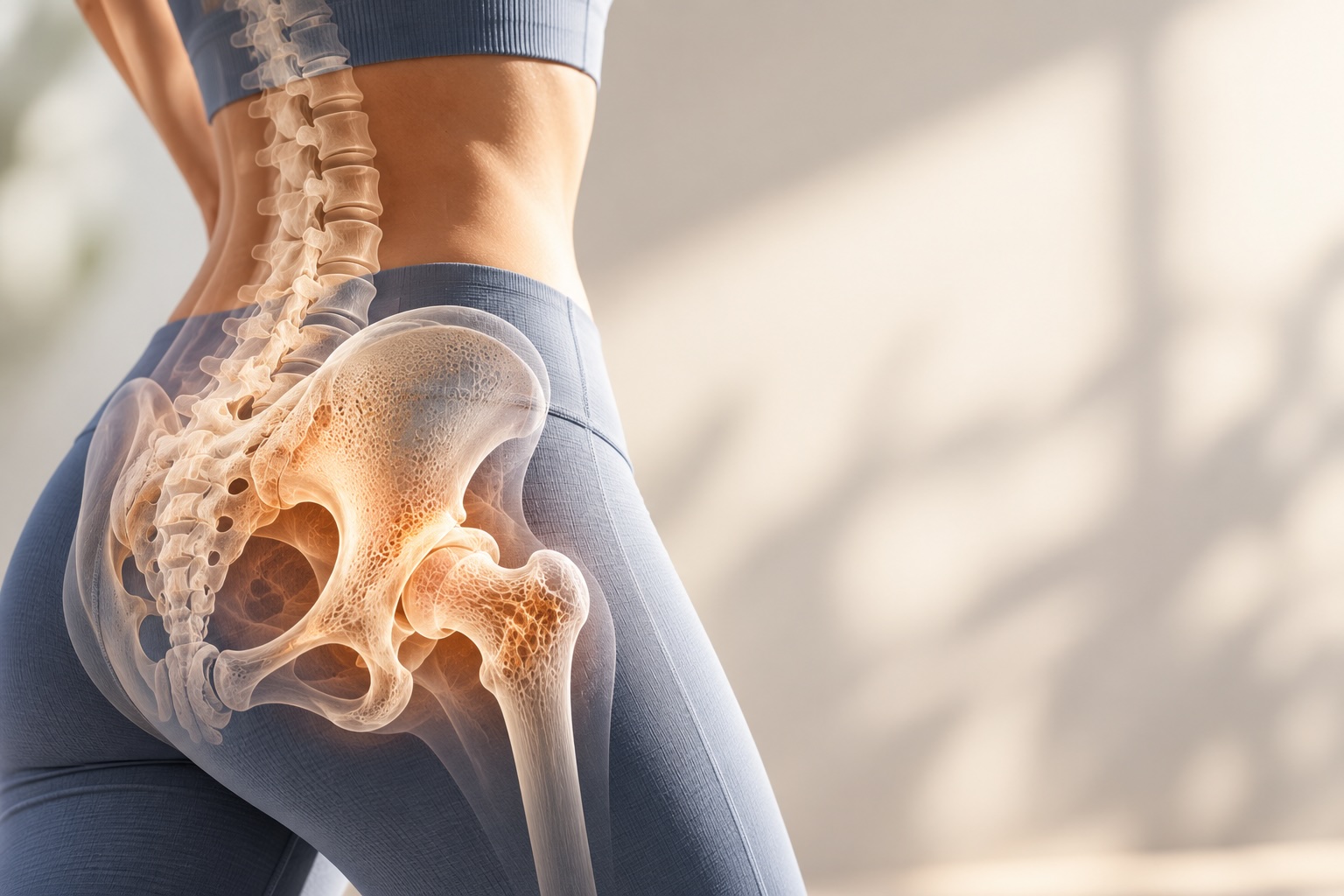
Osteoporosis is often thought of as an inevitable part of getting older — something that simply happens with age and is managed through medication, caution and avoiding activities that might cause injury. However, maintaining strong bones is much more proactive than this.
Exercise plays an important role in maintaining bone strength, reducing the rate of bone loss and supporting healthy ageing. Just as importantly, staying active helps improve muscle strength, balance and coordination — all of which can reduce the risk of falls and fractures.
With the right type of exercise and appropriate guidance, it is never too early — or too late — to start looking after your bones.
What Is Osteoporosis?
Osteoporosis is a condition in which bones become less dense and structurally weaker, making them more susceptible to fractures. These fractures commonly occur at the hip, spine and wrist and may happen following a relatively minor fall or injury.
One of the challenges with osteoporosis is that it can develop gradually without obvious symptoms. Many people are unaware that their bone density has declined until they experience a fracture or undergo testing for another reason.
Our bones are not static structures. Bone is living tissue that is continually being broken down and rebuilt through a process known as bone remodelling.
During childhood and early adulthood, our bodies generally build bone faster than they lose it. As we get older, this balance gradually changes. Bone loss becomes more common with age and can accelerate significantly for women following menopause due to changes in oestrogen levels.
While we cannot change every risk factor associated with osteoporosis, the way we move and exercise is something we can influence.
Why Exercise Matters for Bone Health
The key principle is simple: bones respond to load.
When bones are exposed to appropriate mechanical stress through weight-bearing activity, resistance exercise and muscle contraction, the body receives a stimulus to maintain and strengthen bone tissue.
This means that exercise for bone health needs to provide enough challenge to encourage adaptation. While all physical activity has benefits, some forms of exercise provide a greater stimulus to bone than others.
Two types of exercise are particularly important.
Weight-bearing and impact exercise involves activities performed on your feet while working against gravity. Depending on your individual circumstances, this may include brisk walking, stair climbing, hiking, dancing, jogging, tennis or carefully prescribed hopping and jumping exercises.
Higher-impact activities can provide a strong stimulus to bone, but they are not appropriate for everyone. The type and intensity of exercise should reflect your current bone health, strength, balance, previous injuries and overall fitness.
Progressive resistance training involves strengthening the muscles using weights, resistance bands, machines or body weight. As muscles contract and pull on bones, they create mechanical forces that help stimulate the skeleton.
Exercises such as squats, lunges, step-ups, rows, presses and appropriately prescribed lifting exercises can form part of a bone-strengthening program.
For many people, the most effective approach combines resistance training with suitable weight-bearing or impact activities.
What About Fracture and Falls Risk?
It is understandable that someone diagnosed with osteoporosis may become more cautious about exercise. A fear of falling or sustaining a fracture can sometimes lead people to reduce their activity considerably.
However, becoming less active can create its own problems.
Reduced activity can contribute to loss of muscle strength, poorer balance and reduced confidence with everyday movement. Over time, these changes may make falls more likely.
This is why strength and balance training are such important components of osteoporosis management.
The aim is not simply to exercise more. It is to exercise appropriately.
For people with osteoporosis or a history of fractures, certain movements or activities may need to be modified. Exercises involving repeated or heavily loaded spinal flexion, for example, may not be suitable for some individuals. Similarly, introducing higher-impact activities without adequate preparation may unnecessarily increase injury risk.
An individual assessment can help determine which exercises are appropriate and how they should be progressed.
How Can Physiotherapy Help?
Physiotherapists can play an important role in helping people exercise confidently and safely when managing osteoporosis or reduced bone density.
At Motion Health, physiotherapy management may include:
- Assessing your current strength, mobility, balance and physical capacity
- Identifying factors that may contribute to your risk of falling
- Developing an individualised strengthening and weight-bearing exercise program
- Gradually progressing exercise intensity as your strength and confidence improve
- Providing guidance around safe movement, lifting and everyday activities
- Modifying exercise where there is a history of pain, injury or fracture
- Working alongside your GP and other healthcare professionals as part of your overall bone health management
There is no single exercise program that is suitable for everyone. Age, bone density, medical history, previous fractures, current activity levels and other musculoskeletal conditions all need to be considered.
Invest in Your Bones Now
Bone health is something worth thinking about well before osteoporosis develops.
While much of our peak bone mass is established during adolescence and early adulthood, the choices we make throughout adulthood still matter. Staying physically active, maintaining muscle strength and regularly challenging the skeleton can help support stronger bones and better physical function as we age.
This becomes particularly important if you have known risk factors for osteoporosis, such as a family history, menopause, previous low-trauma fractures or reduced bone density.
Most importantly, a diagnosis of osteoporosis does not mean you should stop moving. With appropriate guidance, exercise can be an important part of maintaining your strength, independence and confidence.
If you have osteoporosis, reduced bone density or simply want to be proactive about maintaining strong bones as you age, speak with your physiotherapist about developing an exercise program suited to you.